
Using a Prepaid Mastercard at a Sportsbook: What Works and What Fails
 Available in US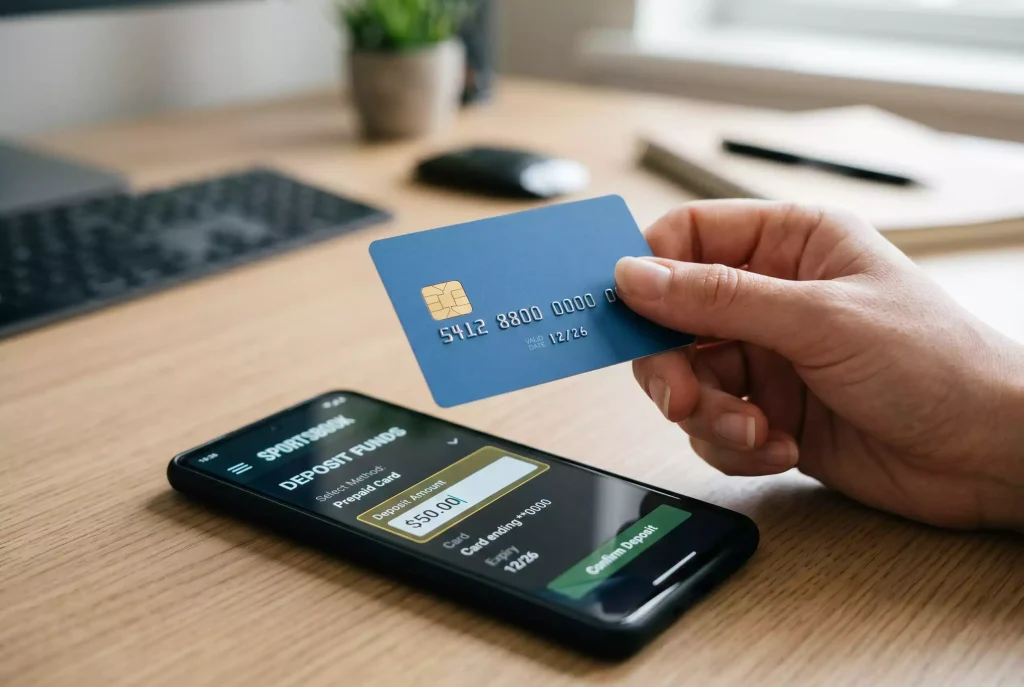
Why prepaid Mastercards are a trap and an escape route at the same time
The second-most-common question I get from friends who bet — right after “why did my card decline?” — is whether a prepaid Mastercard will save them from a blocked deposit. The honest answer is: sometimes. I have watched a cheap reloadable prepaid clear a $200 deposit at a US tier-one operator on the first try when the same user’s bank-issued credit Mastercard had been bounced twice. I have also watched a glossy $500 Vanilla gift card fail five cashiers in a row on a Sunday night.
Prepaid is a category, not a product. The approval behaviour depends on whether the card is personalised, whether it is reloadable, which BIN range it sits on, and whether the issuer has filed the card with the network as supporting online gambling merchants. In this guide I walk through what works on Australian-licensed and major offshore operators in 2026, what silently fails, why payouts almost never come back to a prepaid, and the state-level quirks that trip up overseas readers.
How prepaid differs from credit and debit at the cashier
Here is a test I run when a reader emails me convinced their prepaid card “is just like a debit”. I ask them to open their banking app and screenshot the product name. Nine times out of ten, the card is not linked to a demand deposit account at all — it is a pooled float held by the issuer, and that single fact changes everything downstream.
Credit Mastercards draw on an unsecured revolving line. Debit Mastercards draw on your own bank balance with real-time authorisation against that account. Prepaid Mastercards draw on a ring-fenced balance loaded in advance, and the issuer reports that balance to the network on request. From the cashier’s point of view the three flows look superficially identical — a 16-digit PAN, an expiry, a CVV, a 3D Secure prompt — but the risk engine behind the scenes sees three very different things.
The critical piece is the Merchant Category Code. Regulated US sportsbooks ride on MCC 7801, the “Internet Gambling — US Region Only” code Mastercard introduced so issuers can treat domestic licensed operators differently from offshore casinos on the older MCC 7995. Debit cards pass MCC 7801 routinely. Credit cards pass or decline based on issuer policy. Prepaid cards are the wild card — many prepaid BINs are programmed to block any gambling MCC on principle, because the issuer has no revenue upside and every downside if the cardholder charges back.
The other piece is approval rate. The iGaming industry runs a card decline rate of 30 to 40 percent against 5 to 10 percent in ordinary e-commerce, and prepaid sits at the painful end of that range. For an Australian bettor using a domestic debit Mastercard at a licensed local book the approval path is clean. For the same bettor reaching for a generic prepaid Mastercard bought at the supermarket, expect a coin-flip at best.
Which prepaid brands actually clear a sportsbook cashier
I keep a spreadsheet of reader reports going back four years. The pattern is consistent: personalised reloadable prepaids issued by banks or challenger banks clear far more often than single-load gift-style cards sold at retail, and cards explicitly marketed as “travel” or “multi-currency” clear better than cards marketed as “budgeting” or “gift”.
The reloadable category covers cards like bank-issued travel money Mastercards, challenger-bank prepaid accounts tied to a personal name, and payroll-style prepaid cards. These carry a real cardholder identity, pass 3D Secure cleanly, and frequently share BIN ranges with conventional debit products. Sportsbook cashiers treat them as debit by default.
The non-reloadable category is where the trouble lives. Retail gift-style Mastercards — the ones you see on a rack next to the checkout — are issued on BIN ranges that many operators’ risk engines explicitly exclude. Even when the cashier accepts the card number, the authorisation step often fails because the card has no registered billing address or the issuer simply blocks MCC 7801 and MCC 7995 out of the box.
There is a middle category worth naming: programme-issued reloadable prepaids branded by specific retailers or airlines. These behave closer to gift cards than to bank prepaids because the issuer usually locks down the MCC list. I have seen readers succeed with one such card at a specific operator and fail with the identical card at a different operator the next day. A more structured look at the varieties that never make it past the cashier lives in this deeper dive into Mastercard gift cards at sportsbooks, which covers the BIN-level mechanics I only skim here.
The funding side nobody warns you about
Every so often a reader sends me a screenshot of a prepaid card sitting happily loaded with $600 and asks why the sportsbook will not take it. The card balance is not the problem. The funding history is.
When a prepaid Mastercard is loaded from a credit card, the issuer records that funding source on the account metadata. Several sportsbook risk engines read that metadata through standard network lookups and treat the prepaid as a credit-card proxy. That matters in regions where credit-funded gambling is illegal — Australia being the sharp example since the June 2024 ban. The cashier may not tell you this is why it declined. It will simply bounce the transaction with a generic error and move on.
Reload limits also bite. A prepaid card with a $1,000 monthly reload cap is fine for a casual bettor but useless for someone who wants to redeposit after a losing Saturday. In markets where cards remain the dominant deposit method — around 45 percent of UK deposits on debit, 55 percent in Southern Europe, 60 percent in the US — a capped prepaid shows up as the weakest rail in the stack. Volume bettors abandon it within a month.
The quiet issue is expiry. Reloadable prepaids typically carry three-year or five-year expiries, but single-load gift variants often carry shorter windows. I have seen readers load $300, not touch the card for six months, try to deposit, and discover the expiry has passed even though the balance is intact. The card is valid as a payment instrument the moment it expires — but for authorisation at a sportsbook, expired is dead.
Why payouts almost never come home to a prepaid
Here is the asymmetry that catches out first-time prepaid users: depositing is one rail, withdrawing is another, and most prepaid Mastercards cannot receive funds at all.
Sportsbook payouts to card use the Original Credit Transaction message over Mastercard Send or a compatible push-to-card service. That service requires the receiving card to be flagged as eligible for OCTs. Reloadable bank-issued prepaids are sometimes eligible. Single-load retail prepaids almost never are. The operator’s payout module queries the network, the card returns “not eligible”, and the system routes you to a fallback rail — usually ACH, an e-wallet, or a paper check.
The practical result is predictable and annoying. You deposit $300 with your prepaid, you win $600, you request a payout, and the operator sends it to your bank account via ACH or asks you to attach a different withdrawal method. The prepaid is a one-way door. If you have not set up a secondary rail during account registration, the payout simply sits in “pending” until you do.
Even within the eligible-prepaid set, payouts land slower than to a conventional debit card. I have logged real-world arrivals from US operators running Mastercard Send: debit Mastercards clear in 15 to 90 minutes, eligible reloadable prepaids in 2 to 24 hours. Not catastrophic, but worth knowing before you celebrate that cashout screen.
State and country limits worth knowing
Two restrictions trip up readers regularly. The first is state-level: in the US, some regulated jurisdictions prohibit prepaid-funded gambling transactions outright at the operator level, even when the card would technically authorise. The rule varies by state and by licensee, and the sportsbook often enforces it silently by refusing the deposit without explaining why.
The second is jurisdictional at the network level. Australian-licensed operators have been tightening their cashiers since the June 2024 ban on credit-related products, and a prepaid Mastercard funded by a credit line falls inside the ban’s scope. The penalty for an operator who breaches the rule reaches AU$234,750 per contravention, so compliance teams have become aggressive about blocking anything that looks remotely credit-linked. If a prepaid card has been loaded from a credit account at any point in its history, expect trouble at an Australian cashier.
UK behaviour is stricter still. The 2020 credit card gambling ban sits on top of issuer-side gambling blocks from challenger banks, and prepaid cards loaded from credit are explicitly inside the ban’s scope. A UK resident using an Australian-issued prepaid on an offshore operator may still breach UK licence conditions if the card’s funding chain touches credit.
The rule of thumb I give readers is simple. Prepaid works best as a deliberate bankroll cap — you load an amount you are comfortable losing, you bet it, and you treat the rail as one-way. It fails worst when used as a workaround for a declined credit card, because the underlying reason the credit card declined usually applies to the prepaid too.
The wider context is set out in our Mastercard betting breakdown.
Gift cards are a separate case: Mastercard gift cards at sportsbooks.
