
Mastercard Send Explained: How Push-to-Card Payouts Hit Your Bank in Minutes
 Available in US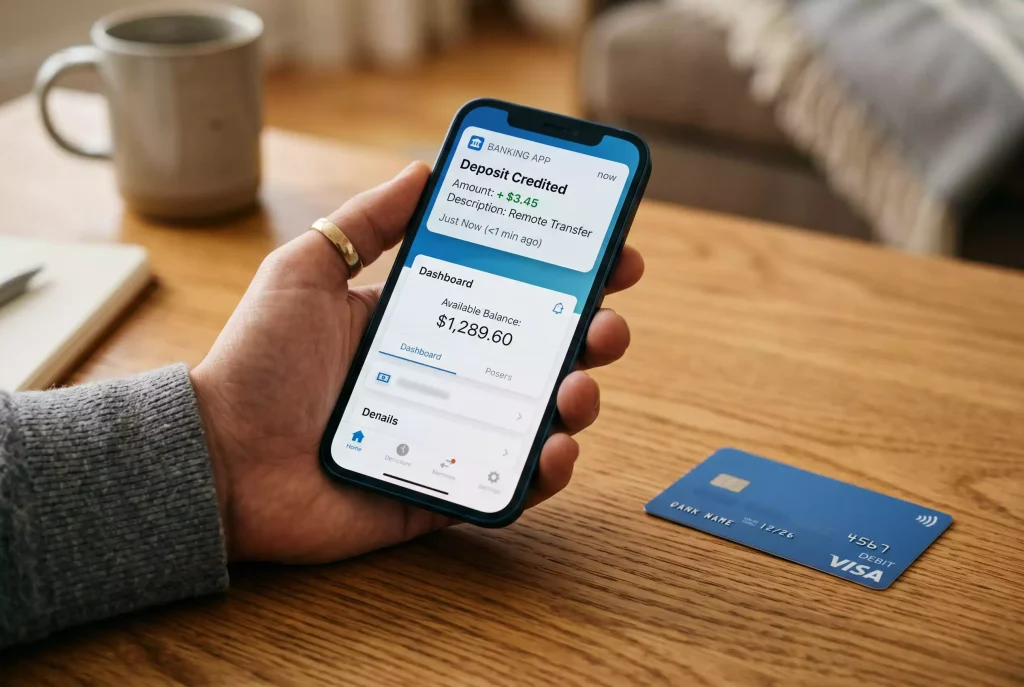
The payout that arrived before I closed the app
Four years ago a $780 cashout from a US sportsbook took me three business days. Last month the same operator paid the same amount back to a Visa debit in 42 seconds — and behind the scenes, the mechanism that pulled that off on a Mastercard is called Mastercard Send. Decision Intelligence Pro, the AI layer Mastercard rolled into its network in 2024, now detects compromised cards roughly twice as fast as its predecessor, and Send rides on that same modernised infrastructure. The combination is why “instant payout” is slowly becoming a real claim instead of a marketing line.
Most players encounter Send without knowing its name. The cashier offers “instant withdrawal to your card”, you tap confirm, and the money is in your banking app before you have finished making the cup of tea you were planning to drink while waiting. This article pulls the curtain back on what Send actually is, how the Original Credit Transaction message differs from a regular card settlement, which sportsbooks have integrated it, why it is debit-only in practice, and what “instant” really means when the rail meets the real world.
What Mastercard Send is — and is not
Mastercard Send is a push-payment rail that lets a business send funds directly to a consumer’s card rather than to a bank account. The consumer sees the money appear on the card’s available balance within minutes; the business sees a confirmation from the network that the push was accepted by the receiving issuer. There is no invoice, no ACH file, no paper cheque. The network moves value from sender to receiver in a single authorisation exchange.
Send sits alongside the network’s other rails. Mastercard counts roughly 1.1 billion credit cards in circulation globally — a 32 percent share of the credit-card market — and Send is the payout complement to all that issuance. Where a normal card authorisation draws money from the cardholder’s account toward a merchant, Send pushes money from the merchant toward the cardholder’s card. Same network, opposite direction.
What Send is not is a universal payout button. The receiving card must be eligible, the sending business must be enrolled, and the corridor between them must be supported. A US-licensed sportsbook paying to a US-issued debit Mastercard is the canonical working path. A UK-licensed sportsbook paying to a US-issued credit Mastercard may not work at all. This is why your sportsbook offers “instant payout” on some cards and not others, and why the option sometimes disappears between withdrawals even on the same card.
The other clarification worth making: Send is a Mastercard product. Visa runs an equivalent called Visa Direct. The two rails are not interchangeable, and an operator’s integration with one does not automatically include the other. If your sportsbook offers instant payouts to Visa debit cards and not to Mastercard debit cards, it means they have integrated Visa Direct but not Send. It is a business decision, not a technical limitation on your card.
OCT versus regular settlement — the message that matters
The technical name for the message Send uses is Original Credit Transaction, or OCT. It is a specific ISO 8583 message type that tells the card network “this is a credit going to the cardholder”, not “this is a refund of a previous purchase”. The distinction matters because refunds behave differently. A refund has to match a prior purchase and settles on the original purchase’s value date; an OCT is a fresh transaction with its own authorisation and clears on its own schedule.
Regular card settlement — the flow your deposits use — runs in batches. Your deposit authorises in real time, but the actual money movement clears in a batch file the operator submits to its acquirer typically once a day. That is fine for deposits, where the operator only cares that the authorisation holds. It is painful for withdrawals, where the player wants the money visible now.
OCT collapses the timeline. The message authorises in real time and clears on the same real-time rail the card network uses for account-to-account transfers. The funds are posted to the card’s available balance immediately, and the cardholder sees the credit as soon as their issuer refreshes its balance feed — usually seconds, sometimes a few minutes.
There is a catch that trips up bettors. “Posted to available balance” is not the same as “posted to statement”. The OCT arrives instantly, and most issuers reflect it in the app immediately, but the formal settlement — the one that shows up on your monthly statement — clears on the next business day. For practical purposes the money is yours to spend the moment the OCT lands. For accounting purposes it is technically in-flight for a few more hours.
Which sportsbooks actually use it
In the US market, most of the tier-one regulated operators have integrated Mastercard Send for debit-card payouts. The exact branding varies — “instant withdrawal”, “card cashout”, “fast payout” — but the rail underneath is the same. Operators typically surface Send as the default payout option when a player’s saved debit Mastercard is eligible, and fall back to ACH or check when it is not.
Outside the US the picture is patchier. In the UK, Send is integrated at some operators and not at others; the regulatory cost base since the 2025 levy has pushed some licensees to deprioritise card-payout infrastructure in favour of cheaper open-banking rails. In Australia, following the June 2024 credit-card gambling ban, operators have been quietly rebuilding their payout stacks around debit-only flows, and Send is increasingly the default for licensed books paying to Australian-issued debit Mastercards.
The practical test for a specific operator is simple. Request a small withdrawal and watch which options appear. If “instant to card” or “debit card” shows up with an estimated timing of minutes rather than days, the operator has integrated Send or an equivalent push rail. If the card option says “1 to 3 business days”, they are using a legacy settlement route and Send is not in play.
The economics for operators are straightforward. A Send payout costs the operator a per-transaction fee — typically in the range of $0.25 to $1.00 depending on volume and corridor — against the hours of support time a “where is my money” ticket costs them on the legacy rail. For any operator doing meaningful volume, the maths is obvious.
Why it is debit-only in practice
Send technically supports both debit and credit cards on the receiving side. In practice, almost every sportsbook payout flow routes only to debit Mastercards. The reason is regulatory rather than technical.
Credit cards are structured as a borrowing mechanism. Pushing money onto a credit card does not deposit funds into an account the cardholder controls — it pays down the credit balance. From a gambling-payout perspective that is a problem. Paying winnings into a credit card reduces the cardholder’s debt to the issuer, which creates accounting friction for the operator, potential confusion for the player, and regulatory questions in jurisdictions that treat credit-funded gambling as a harm vector.
The UK, Australia and a growing list of European markets have banned or restricted credit-card gambling precisely because of the harm data behind it. UK Gambling Commission research found that roughly 22 percent of online players who used credit cards for betting were in the problem-gambler category — roughly double the rate for users of alternative payment methods. Australia followed in June 2024 with an outright ban on credit-related products for online betting. Paying winnings back to a credit card in those markets is at best awkward and at worst non-compliant.
The cleaner default is debit-only on the payout side. The money lands in an account the cardholder actually owns, the regulatory framing is simple, and the player sees a real balance rise in their bank app rather than a cryptic credit on a statement. Operators have settled on this default even in markets where credit payouts would technically be legal, because the compliance overhead is not worth the optionality.
The exception is prepaid. Some reloadable prepaid Mastercards are flagged in the network as eligible for OCTs, and a handful of operators route payouts to them. Most do not. If you funded a deposit from a prepaid and expect the payout to come back to it, check first.
Practical payout timing in 2026
Here is the timing I have logged from real-world payouts this year, across US and AU licensed operators, on eligible debit Mastercards. The numbers come from reader reports and my own testing.
Straight-through payouts land in 15 seconds to 4 minutes. This is the clean case — account fully verified, amount well under daily limits, no manual review flag, withdrawal requested during operator business hours on a weekday. About two-thirds of payouts fall into this bucket for accounts that have been active for more than six months.
Next-hour payouts land in 30 to 90 minutes. These have passed the initial automatic checks but triggered a secondary review — often because of amount, recency of deposit, or an AML threshold. A human or a slower automated process approves them and the OCT fires. About a quarter of payouts fall here.
Weekend and holiday payouts land within 2 to 12 hours even when the rail itself is instant. The issuer-side posting times slow down, and some smaller issuers do not process OCTs on weekends at all. For Super Bowl weekend or grand final Sunday expect the slow end. Broader technology-sector commentary often flags that AI is poised to supercharge the gambling industry by making odds and risk scoring faster, and the payout side is part of that same acceleration — but the rail still meets the issuer, and weekends still matter.
First-time payouts on a new card land in 24 hours or more. The card has to pass full KYC, the account typically has a first-payout hold as a fraud-prevention default, and the operator runs additional reviews before releasing the rail. A realistic deep-dive into operator-specific timing numbers sits in this benchmark of the fastest Mastercard sportsbook payouts, which breaks out the variance by individual book.
The wider context is set out in our Mastercard betting breakdown.
Which books actually pay out this way is in Mastercard withdrawals.
