
Mastercard Foreign-Transaction Charges at Offshore Sportsbooks: An Audit
 Available in US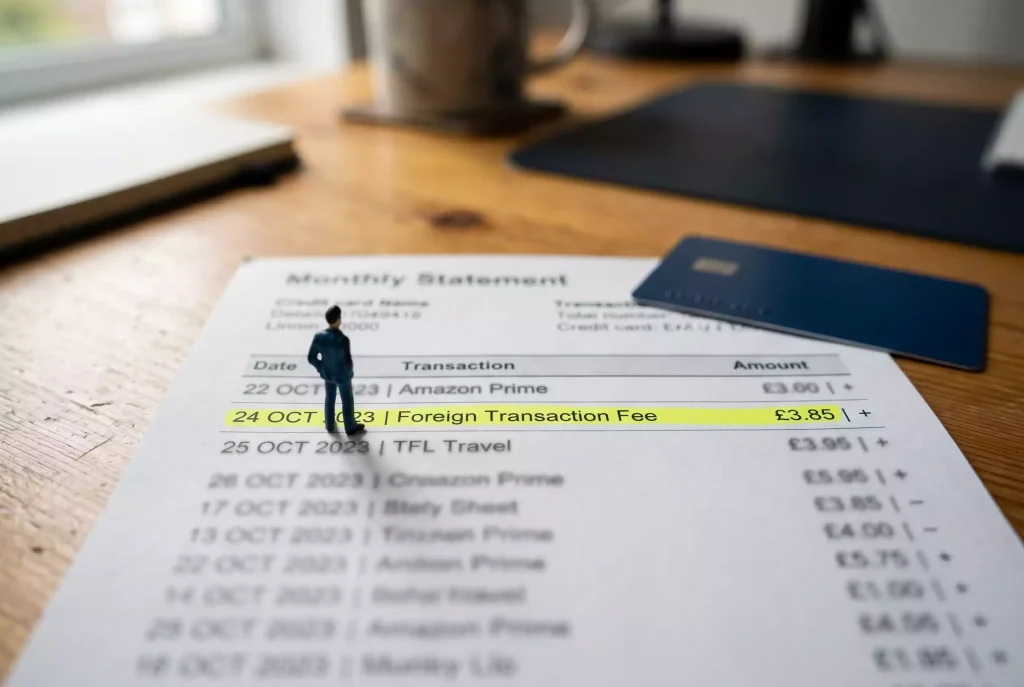
The 2.7 percent that accumulates quietly across twelve months
A reader based in Brisbane worked out the arithmetic on his offshore-sportsbook deposits across 2025 and sent me the spreadsheet. He had deposited a total of $14,300 across the year at an offshore operator his preferred punting market was based with. His Mastercard statement showed $387 in foreign-transaction fees across the same period — 2.7 percent of total deposits, a fee line he had noticed on individual statements but had never totalled. The annualised figure was large enough that he had rebuilt his deposit stack around it by early 2026, moving as much volume as possible to a card that waived foreign-transaction fees.
Foreign-transaction fees are the quiet tax on cross-border gambling. Individually they are small; cumulatively they are material. The mechanism is simple but the interaction with the currency-conversion layer and with issuer-specific markup policies creates more variation than most bettors realise. This piece walks through what a foreign transaction actually is from the network’s perspective, which operator types trigger the flag, how the network exchange rate really works, how issuer FX markup varies by card, and how to avoid double-charging across the corridor.
What counts as a foreign transaction
A foreign transaction in Mastercard terms is a transaction where the acquirer processing the merchant’s side of the transaction is located in a different country from the issuer of the card. The cardholder’s physical location does not matter; the merchant’s registered location does not matter; the acquirer’s location is what triggers the flag.
This definition produces some surprises. A US-issued Mastercard used at a merchant that is legally US-based but whose acquirer is based in Europe will be flagged as foreign. A bettor depositing in US dollars at a sportsbook licensed in Malta will be charged a foreign-transaction fee even though the bettor never left the US and the currencies matched. The fee is about acquirer jurisdiction, not about currency or geography.
The acquirer choice is the operator’s. When a sportsbook sets up its card-processing infrastructure, it chooses an acquirer whose pricing, risk tolerance and compliance fit its needs. For a fully regulated US operator, the acquirer is almost always US-based, which means transactions appear as domestic for US-issued cards. For offshore operators accepting US or Australian or UK bettors, the acquirer is typically based in a lighter-regulation jurisdiction — Curaçao, Malta, Gibraltar — and transactions from major-market-issued cards will always appear as foreign.
Operators that trigger the foreign-transaction flag
The flag is triggered by operator structure rather than by operator reputation. A regulated domestic operator never triggers it for domestic cards. An offshore operator almost always does.
US-licensed sportsbooks paying with US-based acquirers process US card deposits as domestic. FanDuel, DraftKings, BetMGM, Caesars and the rest of the major US books all fall into this category. An Australian bettor’s US-issued Mastercard used at FanDuel (which is blocked anyway for non-US users on regulatory grounds) would be domestic for the card; an Australian-issued Mastercard used at FanDuel would be foreign, because the acquirer is US-based.
UK-licensed sportsbooks with UK-based acquirers process UK card deposits as domestic. An EU-issued card used at a UK-licensed book is foreign. Similarly, Australian-licensed operators paying with Australian acquirers process Australian card deposits as domestic.
Offshore operators with acquirers in tax-friendly jurisdictions process almost all card deposits from major markets as foreign. A US-issued card, a UK-issued card, an Australian-issued card — all foreign when the acquirer is in Curaçao or a similar jurisdiction. Even if the bettor and the card are domestic to a specific major market, the operator’s acquirer choice makes the transaction foreign.
The practical check for a bettor wondering whether a specific operator will trigger the flag is straightforward: make a small test deposit and check the statement. The foreign-transaction fee appears as a separate line typically within 1 to 3 days of the deposit posting. If the fee is not there, the operator processes through a domestic acquirer for your issuer.
The Mastercard network FX rate
When a transaction crosses currencies, Mastercard’s network applies an exchange rate to convert between the merchant’s currency and the cardholder’s currency. The network publishes daily reference rates for major currency pairs, and those rates are used as the basis for the conversion.
The network rate is not the mid-market rate. Mastercard adds its own small markup over mid-market — typically 25 to 100 basis points depending on the currency pair — and the resulting rate is what the issuer uses to settle the transaction into the cardholder’s home currency. This markup is not disclosed as a separate fee; it is embedded in the exchange rate itself.
For context on Mastercard’s scale, the network processed roughly $4 trillion in credit-card purchases in 2023, representing about 21 percent of global credit-card volume. Even small markups applied across that volume are a meaningful revenue stream, and the markup exists because the network bears real risk on cross-currency settlement timing and dispute resolution.
The network rate is relatively stable day to day for major pairs — USD/EUR, USD/GBP, USD/AUD — but can move noticeably during high-volatility events. A deposit made during an unusually volatile currency moment can lock in a worse rate than the mid-market rate suggests, because the network’s daily rate lags the spot market by several hours.
Issuer FX markup by card
On top of the network’s markup, the issuer often applies its own markup on foreign transactions — and this is where the variation across cards is largest.
Most standard consumer credit and debit Mastercards charge a foreign-transaction fee of 1 to 3 percent on top of the network rate. This is disclosed as a separate line on the statement and is straightforward to account for. The rate is typically the same across all foreign transactions on that card regardless of currency pair or merchant type.
Premium travel cards often waive the foreign-transaction fee entirely as a product feature. For a bettor who regularly uses offshore operators, the product choice can save 2 to 3 percent on every deposit. The annual fee on a premium travel card — typically $95 to $550 — can be recovered quickly if the annual deposit volume is meaningful.
Some challenger banks and fintech Mastercards use the network rate directly without adding an issuer markup. These cards are often marketed as “travel-friendly” or “no FX fees”, and they represent the cheapest path for cross-border deposits. The specific implementation varies — some offer full network rate passthrough, others add a small markup only outside of business hours when the network rate is less current.
Certain cards apply a higher foreign-transaction fee specifically on cash-advance-coded transactions. A gambling deposit coded as a cash advance on a foreign acquirer can face both the cash-advance fee (typically 5 percent) and an elevated foreign-transaction fee (up to 5 percent in some cases), for a combined overhead of 10 percent before currency conversion effects. This is the worst-case stack and worth checking specifically.
How to avoid double charging
The most common double-charging scenario is currency-choice at the cashier. Some offshore operators ask whether the bettor wants to transact in their home currency (say, USD) or the operator’s settlement currency (say, EUR). The “home currency” option is dynamic currency conversion (DCC), and it is almost always worse for the cardholder than the “settlement currency” option.
DCC lets the operator’s processor run the conversion rather than the network. The processor’s exchange rate is typically worse than the network rate — often 3 to 6 percent over mid-market rather than 1 to 2 percent. And critically, the issuer still charges the foreign-transaction fee on the DCC transaction because the acquirer is still foreign; the cardholder pays the processor’s markup and the issuer’s fee on top.
The rule is simple: when offered a choice of currency at a foreign acquirer, always choose the operator’s settlement currency. The conversion will happen through the network at the standard markup, and the issuer’s foreign-transaction fee applies once. Choosing your home currency adds the processor’s DCC markup without reducing any other fee.
A second scenario is the cash-advance stacking mentioned above. If a specific credit Mastercard codes gambling as cash-advance and charges a higher foreign-transaction fee on cash-advance transactions, the combined cost is high enough that the card should simply not be used for offshore gambling deposits. A debit Mastercard on the same issuer, or a different credit card without the cash-advance treatment, is materially cheaper. A detailed breakdown of how card tiers interact with these fees and which premium cards actually deliver better behaviour at the cashier sits in this look at how Mastercard Gold, Platinum and World Elite tiers behave at sportsbooks.
The third scenario is unnecessary cross-border use. For bettors with a choice between a regulated domestic operator and an offshore operator, the fee math alone can recommend the domestic option. A 3 percent cost advantage per deposit across a year’s worth of wagering is meaningful even for a recreational bettor, and it compounds when combined with the regulatory protections and consumer-dispute frameworks that domestic operators offer.
The wider context is set out in our Mastercard betting breakdown.
The rest of the charge stack is in Mastercard fees on deposits.
