
Mastercard Credit Card Betting: Where It Is Legal in 2026 and Where It Is Not
 Available in US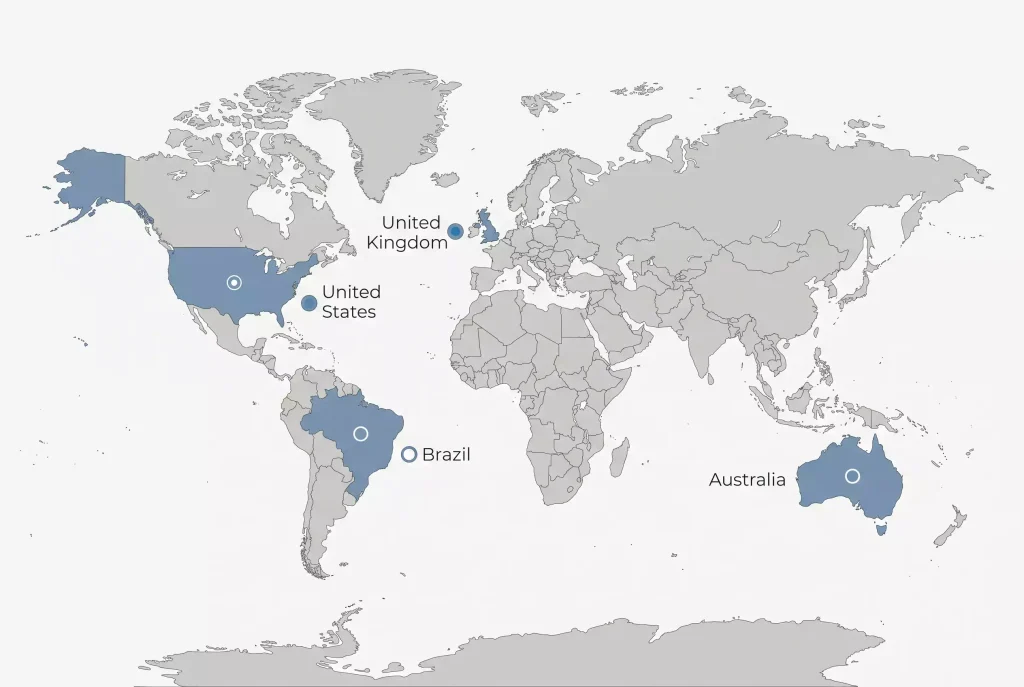
The map that changed more in five years than in fifty
Until 2020, credit-card gambling was legal almost everywhere that gambling itself was legal. By 2026, a third of the major English-speaking markets have banned it outright, another third have partial restrictions, and the remaining third are edging toward regulation rather than away from it. The UK Gambling Commission’s full ban on credit-card gambling landed on 14 April 2020 and set the template. Australia followed four years later. Brazil is implementing its own version in 2026. The direction of travel is clear; the details vary enormously by jurisdiction.
For a Mastercard holder who bets, the question “can I use my credit card” has genuinely different answers depending on where you are sitting, which country issued your card, and which operator licence you are depositing with. This piece walks through the current picture country by country — UK, Australia, US state by state, Canada, and the new Brazilian regime — and flags the policies that have tightened, loosened or stayed still in the last twelve months.
The UK: the original full ban, still holding
The UK Gambling Commission introduced the credit-card gambling ban in April 2020, prohibiting all forms of gambling with credit products for all Great Britain gambling licence holders. The scope is wider than it first reads: the ban covers credit cards, credit-related products, and any e-wallet funded from a credit facility. If your Mastercard credit card is linked to PayPal, and you deposit via PayPal, and PayPal draws from the credit card, the transaction breaches the ban as clearly as a direct card deposit.
The scale at the time of introduction explains why the regulator moved. Roughly 24 million British adults gambled before the ban, around 10.5 million of them online, and roughly 800,000 used credit cards for gambling. Among the credit-card gamblers, about 22 percent met the problem-gambler criteria — close to double the rate seen with alternative payment methods. The regulator took the view that the harm data was strong enough to justify a blunt instrument.
Enforcement has been firm since 2020. UKGC-licensed operators police card submissions at the cashier; bank-identification-number checks identify credit cards and refuse deposits before they reach authorisation. The structure is clean precisely because the responsibility sits with the operator — licensees who breach the ban face licence action, and the commercial downside is severe enough that compliance is near-universal.
Debit Mastercards remain fully legal for gambling in the UK. Prepaid Mastercards are legal only if they are not funded from a credit source; a prepaid loaded from a current account works, a prepaid loaded from a credit card does not.
Australia: the 2024 ban and its sharp penalties
Australia’s credit-card gambling ban took effect on 11 June 2024, covering credit cards, credit-related products and digital currency for online wagering. The policy captured a broader instrument list than the UK’s, because the Australian framework was written after the UK’s experience and adjusted for the gaps the UK ban had left.
The penalty framework is where the Australian ban has real teeth. An operator that accepts a prohibited credit-related deposit faces a fine of up to AU$234,750 per contravention — roughly $155,085 — and the Australian Communications and Media Authority has been willing to issue formal warnings and directions to licensees that have slipped. The economic incentive to get the cashier logic right is overwhelming.
The explicit rationale from the government has been blunt. The minister responsible for the rollout said at the time that Australians should not be gambling with money they do not have, framing the ban as consumer protection rather than restriction of legitimate activity. That framing has held in the eighteen months since, and there is no political pressure to reverse it.
For an Australian bettor in 2026, the practical rules are straightforward. Debit Mastercards work at domestic-licensed operators. Credit Mastercards do not. Prepaid Mastercards work only if they are not linked to a credit funding source in their account history — and operators increasingly check that history through standard network lookups. Offshore operators accessing Australian players are not bound by Australian licensing rules, but they are bound by banking-side restrictions when an Australian-issued credit card hits the Australian payment corridor.
The US: the patchwork by state
The US has no federal ban on credit-card gambling for regulated sports betting, and there is no imminent sign of one. The combined commercial gambling sector delivered $78.72 billion in GGR in 2025, up 9.2 percent year-on-year, and federal policy-makers have shown no appetite for a blanket restriction given the revenue and tax take involved.
The state-level picture is more nuanced. A handful of states have passed specific restrictions on credit-card deposits at regulated sportsbooks — Iowa’s sports betting law prohibited credit-card deposits from launch, and Pennsylvania has imposed restrictions on credit-card use for certain gambling products. Most states leave the question to the operator’s own responsible-gambling policies, which typically allow credit-card deposits subject to enhanced monitoring.
What is happening at the bank level is arguably more influential than what is happening at the state level. US issuers have been tightening credit-card gambling policies at the card-product level even in states where no law requires it. The result is a patchwork within a patchwork — a bettor in a permissive state with a restrictive issuer has the same practical experience as a bettor in a restrictive state with a permissive issuer.
The 2026 direction of travel is slow but consistent. Calls for state-level or federal restrictions on credit-card gambling have grown louder as more research surfaces on the correlation with problem gambling. Whether this crystallises into legislation depends on how the 2026–2028 regulatory cycle plays out, and realistic timelines for any broad US restriction sit well past 2030.
Canada: the mixed picture by province
Canada regulates gambling at the provincial level, and the credit-card question follows provincial lines. Ontario, the largest regulated online gambling market in Canada, allows credit-card deposits at iGaming Ontario-registered operators subject to operator-level responsible-gambling controls. British Columbia, Quebec and Alberta take slightly different approaches within their own provincial monopolies.
Issuer-side policy in Canada tracks a similar trajectory to the US. Large Canadian banks have tightened their credit-card gambling stance in recent years, and several decline MCC 7995 outright on certain card products while allowing MCC 7801 for regulated domestic operators. The bettor experience varies by bank and by card product, and the single most useful action is to ask the issuer the specific question before attempting a deposit.
There is no imminent federal ban on credit-card gambling in Canada, and the provincial regulators have not moved toward one in 2026. The pressure point is policy, not law, and the policy trend is quietly toward restriction.
Brazil: the 2026 regulatory cycle
Brazil’s regulated online betting market launched in 2025, and the 2026 cycle is introducing payment-method restrictions as the regulator builds out the compliance framework. The initial rules restrict deposits to debit-based instruments, excluding credit cards and credit-related products from licensed sportsbook deposits. The scope of “credit-related” is broader than in the US and narrower than in Australia, and it is being refined through regulatory guidance rather than primary legislation.
The 2026 implementation has been uneven — some operators updated their cashiers months ahead of the formal cut-off, others were still accepting credit cards past the deadline before the regulator intervened. The direction is unambiguous: Brazil is following the UK and Australian template rather than the US permissive model, and credit-card gambling on licensed Brazilian operators is being phased out regardless of issuer policy.
For international bettors using Brazilian-issued Mastercards abroad, the domestic ban does not apply to offshore transactions. For Brazilian bettors using foreign-issued credit Mastercards on Brazilian-licensed operators, the operator is required to refuse the deposit — the issuer’s country of origin does not change the operator’s obligation.
A closer look at the UK precedent that Brazil and several other markets are drawing from — and what the data behind the 2020 ban actually looks like in practice — sits in this piece on the 2020 UK credit card gambling ban and what it changed for Mastercard users.
The wider context is set out in our Mastercard betting breakdown.
The oldest of these bans is the 2020 UK credit card ban.
